
hobie
Well-known member
- Joined
- Aug 9, 2019
- Messages
- 649
- Gender
- Male
- Religious Affiliation
- Seventh Day Adventist
- Political Affiliation
- Conservative
- Marital Status
- Married
We see the words of Christ.
Matthew 5:20
For I say unto you, That except your righteousness shall exceed the righteousness of the scribes and Pharisees, ye shall in no case enter into the kingdom of heaven.
This is clear, being under to law to Christ is beyond the level of the literal law, that it surpasses even what the Jews and their teachers thought it was and followed. The principles of Gods governance are embodied in the Ten Commandments and exemplified in the life of Christ, and here Christ unveils more. The law was intended by God to keep before the minds of Israel and men everywhere that the real meaning and purpose of the law lay in the full and final revelation when Christ would come to this world. And what does Christ say, He says that ones righteousness would go beyond the law if one wanted to enter into eternal life. We see Christ laying it out to the rich young man.
Matthew 19:17
16 And, behold, one came and said unto him, Good Master, what good thing shall I do, that I may have eternal life?
17 And he said unto him, Why callest thou me good? there is none good but one, that is, God: but if thou wilt enter into life, keep the commandments.
18 He saith unto him, Which? Jesus said, Thou shalt do no murder, Thou shalt not commit adultery, Thou shalt not steal, Thou shalt not bear false witness,
19 Honour thy father and thy mother: and, Thou shalt love thy neighbour as thyself.
20 The young man saith unto him, All these things have I kept from my youth up: what lack I yet?
21 Jesus said unto him, If thou wilt be perfect, go and sell that thou hast, and give to the poor, and thou shalt have treasure in heaven: and come and follow me.
22 But when the young man heard that saying, he went away sorrowful: for he had great possessions.
So Christ begins with the standard that had been given, to keep the Commandments, and the young man lays claim to doing that 'All these things have I kept from my youth up' but notice what he says next, 'what lack I yet?'
Jesus says to go beyond the law, so surpass it and give all 'and come and follow me.' Christ wants us to obey out a of love for God and neighbor that goes above the literal words given in the law, and that we know, we cannot claim ignorance...
Acts 17:30-31
30 And the times of this ignorance God winked at; but now commandeth all men every where to repent:
31 Because he hath appointed a day, in the which he will judge the world in righteousness by that man whom he hath ordained; whereof he hath given assurance unto all men, in that he hath raised him from the dead.
Now lets look to Paul and see what further explains this, as we are to go beyond the law as Christ makes clear and under Christs grace.
Romans 6:14
For sin shall not have dominion over you: for ye are not under the law, but under grace.
Many look and say well this does away with Gods Law, that those who follow the Ten Commandments are 'legalistic'. That although they are 'under grace,' by walking in a path of obedience, that keeps 'the commandments' they are in danger of coming 'under law' again.
So is Paul saying that the Ten Commandments have any further claims upon the believer, that they no longer have to keep the Law. Well, Paul gives a answer to that as he knew that would be the question. So what does he say, lets look.
Romans 6:15
What then? shall we sin, because we are not under the law, but under grace? God forbid.
Paul makes clear that this is not so we can sin, but that under grace, those who truly believe will not go into sin as he states 'God Forbid' to such a thought. So what is Paul talking about here in Romans, well we get a clue in his letter to Corinthians.
1 Corinthians 9:20-21
20 And unto the Jews I became as a Jew, that I might gain the Jews; to them that are under the law, as under the law, that I might gain them that are under the law;
21 To them that are without law, as without law, (being not without law to God, but under the law to Christ,) that I might gain them that are without law.
So what is Paul saying here, well obviously he is talking about the Jews versus the Gentiles, but notice he says a curious thing, 'being not without law to God, but under the law to Christ'. So what is Paul saying, it is beyond the literal law and under the law of love which is the whole point Christ makes. So we will be judge by this law of love that we are given which is the literal law, 'being not without law to God', and the level of love that surpasses even that, 'but under the law to Christ.'
Now lets look at the Law more closely as it is based on God's holy nature and as such scripture states are holy, just, and unchanging, and we see this in the Ten Commandments. But then you also have the ceremonial law which focused the people’s attention on God and gave the people signs that point to the coming Messiah, such as the Passover, and the sacrifices of the unblemished lamb by the priests. One was written with Gods own finger, and the other was from Moses.
Matthew 5:17-19
17 Think not that I am come to destroy the law, or the prophets: I am not come to destroy, but to fulfil.
18 For verily I say unto you, Till heaven and earth pass, one jot or one tittle shall in no wise pass from the law, till all be fulfilled.
19 Whosoever therefore shall break one of these least commandments, and shall teach men so, he shall be called the least in the kingdom of heaven: but whosoever shall do and teach them, the same shall be called great in the kingdom of heaven.
We see here that Jesus stated "Think not that I am come to destroy the law..but to fulfill", what did He mean? Now, since Jesus knew what laws His death would fulfill, would He be saying this about the Ten Commandments if He were going to fulfill them? So what was He fulfilling, it seems clear it was what pointed to Him, Moses’ ceremonial law which is evident if we see what Jesus said when asked.
Mark 12:28-31
28 And one of the scribes came, and having heard them reasoning together, and perceiving that he had answered them well, asked him, Which is the first commandment of all?
29 And Jesus answered him, The first of all the commandments is, Hear, O Israel; The Lord our God is one Lord:
30 And thou shalt love the Lord thy God with all thy heart, and with all thy soul, and with all thy mind, and with all thy strength: this is the first commandment.
31 And the second is like, namely this, Thou shalt love thy neighbour as thyself. There is none other commandment greater than these.
Matthew 22:37-40
37 Jesus said unto him, Thou shalt love the Lord thy God with all thy heart, and with all thy soul, and with all thy mind.
38 This is the first and great commandment.
39 And the second is like unto it, Thou shalt love thy neighbour as thyself.
40 On these two commandments hang all the law and the prophets.
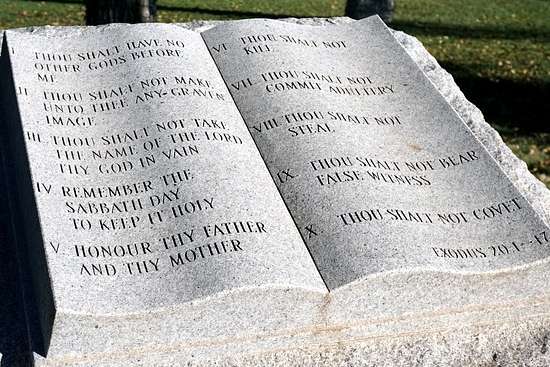
The Ten Commandments are arranged in two groups, the first group of four commandments deal with our relationship to God, the second group of the fifth to the tenth commandments deal with our relationship to one another. When Jesus talks about 'not that I am come to destroy the law', it is obvious that it is the Ten Commandments Jesus is talking about. So did Jesus want to do away with the Ten Commandments or did He came to fulfill that which pointed to Him as the Lamb of God, the ceremonial law of Moses. We have to understand His purpose.
Matthew 5:20
For I say unto you, That except your righteousness shall exceed the righteousness of the scribes and Pharisees, ye shall in no case enter into the kingdom of heaven.
This is clear, being under to law to Christ is beyond the level of the literal law, that it surpasses even what the Jews and their teachers thought it was and followed. The principles of Gods governance are embodied in the Ten Commandments and exemplified in the life of Christ, and here Christ unveils more. The law was intended by God to keep before the minds of Israel and men everywhere that the real meaning and purpose of the law lay in the full and final revelation when Christ would come to this world. And what does Christ say, He says that ones righteousness would go beyond the law if one wanted to enter into eternal life. We see Christ laying it out to the rich young man.
Matthew 19:17
16 And, behold, one came and said unto him, Good Master, what good thing shall I do, that I may have eternal life?
17 And he said unto him, Why callest thou me good? there is none good but one, that is, God: but if thou wilt enter into life, keep the commandments.
18 He saith unto him, Which? Jesus said, Thou shalt do no murder, Thou shalt not commit adultery, Thou shalt not steal, Thou shalt not bear false witness,
19 Honour thy father and thy mother: and, Thou shalt love thy neighbour as thyself.
20 The young man saith unto him, All these things have I kept from my youth up: what lack I yet?
21 Jesus said unto him, If thou wilt be perfect, go and sell that thou hast, and give to the poor, and thou shalt have treasure in heaven: and come and follow me.
22 But when the young man heard that saying, he went away sorrowful: for he had great possessions.
So Christ begins with the standard that had been given, to keep the Commandments, and the young man lays claim to doing that 'All these things have I kept from my youth up' but notice what he says next, 'what lack I yet?'
Jesus says to go beyond the law, so surpass it and give all 'and come and follow me.' Christ wants us to obey out a of love for God and neighbor that goes above the literal words given in the law, and that we know, we cannot claim ignorance...
Acts 17:30-31
30 And the times of this ignorance God winked at; but now commandeth all men every where to repent:
31 Because he hath appointed a day, in the which he will judge the world in righteousness by that man whom he hath ordained; whereof he hath given assurance unto all men, in that he hath raised him from the dead.
Now lets look to Paul and see what further explains this, as we are to go beyond the law as Christ makes clear and under Christs grace.
Romans 6:14
For sin shall not have dominion over you: for ye are not under the law, but under grace.
Many look and say well this does away with Gods Law, that those who follow the Ten Commandments are 'legalistic'. That although they are 'under grace,' by walking in a path of obedience, that keeps 'the commandments' they are in danger of coming 'under law' again.
So is Paul saying that the Ten Commandments have any further claims upon the believer, that they no longer have to keep the Law. Well, Paul gives a answer to that as he knew that would be the question. So what does he say, lets look.
Romans 6:15
What then? shall we sin, because we are not under the law, but under grace? God forbid.
Paul makes clear that this is not so we can sin, but that under grace, those who truly believe will not go into sin as he states 'God Forbid' to such a thought. So what is Paul talking about here in Romans, well we get a clue in his letter to Corinthians.
1 Corinthians 9:20-21
20 And unto the Jews I became as a Jew, that I might gain the Jews; to them that are under the law, as under the law, that I might gain them that are under the law;
21 To them that are without law, as without law, (being not without law to God, but under the law to Christ,) that I might gain them that are without law.
So what is Paul saying here, well obviously he is talking about the Jews versus the Gentiles, but notice he says a curious thing, 'being not without law to God, but under the law to Christ'. So what is Paul saying, it is beyond the literal law and under the law of love which is the whole point Christ makes. So we will be judge by this law of love that we are given which is the literal law, 'being not without law to God', and the level of love that surpasses even that, 'but under the law to Christ.'
Now lets look at the Law more closely as it is based on God's holy nature and as such scripture states are holy, just, and unchanging, and we see this in the Ten Commandments. But then you also have the ceremonial law which focused the people’s attention on God and gave the people signs that point to the coming Messiah, such as the Passover, and the sacrifices of the unblemished lamb by the priests. One was written with Gods own finger, and the other was from Moses.
Matthew 5:17-19
17 Think not that I am come to destroy the law, or the prophets: I am not come to destroy, but to fulfil.
18 For verily I say unto you, Till heaven and earth pass, one jot or one tittle shall in no wise pass from the law, till all be fulfilled.
19 Whosoever therefore shall break one of these least commandments, and shall teach men so, he shall be called the least in the kingdom of heaven: but whosoever shall do and teach them, the same shall be called great in the kingdom of heaven.
We see here that Jesus stated "Think not that I am come to destroy the law..but to fulfill", what did He mean? Now, since Jesus knew what laws His death would fulfill, would He be saying this about the Ten Commandments if He were going to fulfill them? So what was He fulfilling, it seems clear it was what pointed to Him, Moses’ ceremonial law which is evident if we see what Jesus said when asked.
Mark 12:28-31
28 And one of the scribes came, and having heard them reasoning together, and perceiving that he had answered them well, asked him, Which is the first commandment of all?
29 And Jesus answered him, The first of all the commandments is, Hear, O Israel; The Lord our God is one Lord:
30 And thou shalt love the Lord thy God with all thy heart, and with all thy soul, and with all thy mind, and with all thy strength: this is the first commandment.
31 And the second is like, namely this, Thou shalt love thy neighbour as thyself. There is none other commandment greater than these.
Matthew 22:37-40
37 Jesus said unto him, Thou shalt love the Lord thy God with all thy heart, and with all thy soul, and with all thy mind.
38 This is the first and great commandment.
39 And the second is like unto it, Thou shalt love thy neighbour as thyself.
40 On these two commandments hang all the law and the prophets.
The Ten Commandments are arranged in two groups, the first group of four commandments deal with our relationship to God, the second group of the fifth to the tenth commandments deal with our relationship to one another. When Jesus talks about 'not that I am come to destroy the law', it is obvious that it is the Ten Commandments Jesus is talking about. So did Jesus want to do away with the Ten Commandments or did He came to fulfill that which pointed to Him as the Lamb of God, the ceremonial law of Moses. We have to understand His purpose.