
jswauto
Well-known member
- Joined
- Apr 19, 2025
- Messages
- 1,103
- Gender
- Male
- Religious Affiliation
- Charismatic
- Marital Status
- Married
- Acceptance of the Trinity & Nicene Creed
- Yes
A Founding Explanation of the Establishment Clause "And Congress shall make no law respecting an establishment of religion..."
Fellow citizens,
We, the architects of this Republic, inscribed these words into the First Amendment not to diminish faith, but to preserve its sanctity. Our intention was clear: that no government, however well-meaning, should wield power over the soul of man. The conscience is not subject to legislation. It is the domain of the Creator and the individual alone.
In the Old World, we witnessed the ruin that follows when church and state are entwined. Thrones dictated doctrine. Dissenters were punished. Faith became a tool of tyranny. We resolved that in this new nation, no such yoke would be placed upon the people. Congress shall make no law establishing a national religion, nor favoring one sect over another. The pulpit shall not be governed by the gavel.
This clause is not a denial of religion’s importance. On the contrary, it is a safeguard for its flourishing. By removing the hand of government from the altar, we ensure that belief remains voluntary, sincere, and free from coercion. Let every man worship according to the dictates of his own conscience — be he Christian, Jew, Muslim, Deist, or none at all.
We do not seek a nation without religion, but a nation where religion is not imposed. The state must not build churches, appoint clergy, or prescribe creeds. It must neither compel prayer nor prohibit it. Its duty is neutrality — not hostility, and not favoritism.
Let it be understood: this liberty is not license for disorder, but a foundation for harmony. When government respects the boundaries of faith, and faith respects the bounds of law, both may thrive. This is not merely a legal principle — it is a moral covenant between the governed and their governors.
In this, we entrust you with vigilance. For liberty, once granted, must be guarded. Should future generations forget this balance, let them return to these words and remember: the freedom of religion is best preserved when government is forbidden from establishing it.
— In the spirit of Madison, Jefferson, and the framers of liberty
A Founding Explanation of the Free Exercise Clause "…or prohibiting the free exercise thereof."
Fellow citizens,
Having declared that Congress shall make no law establishing religion, we now affirm its equal counterpart: that Congress shall make no law prohibiting the free exercise thereof. These words are not mere ornament — they are a shield for the soul, a guarantee that no magistrate shall dictate how a man communes with his Creator.
We have seen in other lands the tyranny that arises when rulers presume to govern belief. We have seen men fined, imprisoned, or exiled for worshiping in ways not sanctioned by the state. We have seen conscience treated as crime. In this Republic, we reject such despotism. Here, the liberty to worship — or not to worship — is sacred.
The free exercise of religion means that every man may follow the light of his own understanding. He may gather with others, preach, pray, fast, sing, or remain silent. He may build churches, publish tracts, and raise his children in the faith of his choosing. So long as his conduct does not violate the peace or infringe upon the rights of others, his devotion is beyond the reach of law.
This clause is not a license for disorder, nor a refuge for sedition. It does not permit acts of violence cloaked in piety. But it does protect the sincere practice of faith — even when unpopular, even when misunderstood. It is not the role of government to approve or disapprove of doctrine, but to protect the liberty that allows it to flourish.
Let it be known: we do not favor one creed above another. We do not elevate one denomination, nor suppress another. The Baptist, the Quaker, the Catholic, the Jew, the Deist, and the skeptic — all are equal in the eyes of the law. This is not indifference; it is reverence for liberty.
We entrust this freedom to you, the people. Guard it well. For if ever the state is permitted to silence one voice of faith, it may silence all. And if ever the people forget that conscience is sovereign, they may awaken to find it shackled.
— In the spirit of Madison, Jefferson, and the guardians of liberty
 Visual Timeline: Landmark Supreme Court Cases on Religious Liberty (see attached)
Fellow citizens,
We, the architects of this Republic, inscribed these words into the First Amendment not to diminish faith, but to preserve its sanctity. Our intention was clear: that no government, however well-meaning, should wield power over the soul of man. The conscience is not subject to legislation. It is the domain of the Creator and the individual alone.
In the Old World, we witnessed the ruin that follows when church and state are entwined. Thrones dictated doctrine. Dissenters were punished. Faith became a tool of tyranny. We resolved that in this new nation, no such yoke would be placed upon the people. Congress shall make no law establishing a national religion, nor favoring one sect over another. The pulpit shall not be governed by the gavel.
This clause is not a denial of religion’s importance. On the contrary, it is a safeguard for its flourishing. By removing the hand of government from the altar, we ensure that belief remains voluntary, sincere, and free from coercion. Let every man worship according to the dictates of his own conscience — be he Christian, Jew, Muslim, Deist, or none at all.
We do not seek a nation without religion, but a nation where religion is not imposed. The state must not build churches, appoint clergy, or prescribe creeds. It must neither compel prayer nor prohibit it. Its duty is neutrality — not hostility, and not favoritism.
Let it be understood: this liberty is not license for disorder, but a foundation for harmony. When government respects the boundaries of faith, and faith respects the bounds of law, both may thrive. This is not merely a legal principle — it is a moral covenant between the governed and their governors.
In this, we entrust you with vigilance. For liberty, once granted, must be guarded. Should future generations forget this balance, let them return to these words and remember: the freedom of religion is best preserved when government is forbidden from establishing it.
— In the spirit of Madison, Jefferson, and the framers of liberty
A Founding Explanation of the Free Exercise Clause "…or prohibiting the free exercise thereof."
Fellow citizens,
Having declared that Congress shall make no law establishing religion, we now affirm its equal counterpart: that Congress shall make no law prohibiting the free exercise thereof. These words are not mere ornament — they are a shield for the soul, a guarantee that no magistrate shall dictate how a man communes with his Creator.
We have seen in other lands the tyranny that arises when rulers presume to govern belief. We have seen men fined, imprisoned, or exiled for worshiping in ways not sanctioned by the state. We have seen conscience treated as crime. In this Republic, we reject such despotism. Here, the liberty to worship — or not to worship — is sacred.
The free exercise of religion means that every man may follow the light of his own understanding. He may gather with others, preach, pray, fast, sing, or remain silent. He may build churches, publish tracts, and raise his children in the faith of his choosing. So long as his conduct does not violate the peace or infringe upon the rights of others, his devotion is beyond the reach of law.
This clause is not a license for disorder, nor a refuge for sedition. It does not permit acts of violence cloaked in piety. But it does protect the sincere practice of faith — even when unpopular, even when misunderstood. It is not the role of government to approve or disapprove of doctrine, but to protect the liberty that allows it to flourish.
Let it be known: we do not favor one creed above another. We do not elevate one denomination, nor suppress another. The Baptist, the Quaker, the Catholic, the Jew, the Deist, and the skeptic — all are equal in the eyes of the law. This is not indifference; it is reverence for liberty.
We entrust this freedom to you, the people. Guard it well. For if ever the state is permitted to silence one voice of faith, it may silence all. And if ever the people forget that conscience is sovereign, they may awaken to find it shackled.
— In the spirit of Madison, Jefferson, and the guardians of liberty
Visual Timeline: Landmark Supreme Court Cases on Religious Liberty (see attached) Thematic Comparison: Religious Liberty in America vs. Suppression Under Communist Regimes
 United States
- Foundational Principle: The First Amendment guarantees both freedom from government-imposed religion and freedom to practice religion.
- Pluralism Protected: Citizens may worship freely, change faiths, or abstain entirely.
- Judicial Safeguards: Courts actively review laws to prevent coercion, favoritism, or undue burdens on religious exercise.
- Public Expression: Religious symbols, speech, and gatherings are protected, though balanced against public neutrality.
 Communist Regimes (e.g., USSR, Maoist China, North Korea)
- State Atheism: Religion often viewed as a threat to ideological control; belief systems suppressed or co-opted.
- Persecution: Clergy imprisoned, churches closed, religious texts banned. Underground worship became common.
- Surveillance & Control: Religious groups infiltrated, monitored, or forced to register with the state.
- Ideological Indoctrination: Children taught atheism; religious education outlawed. Loyalty to the Party superseded all spiritual allegiance.
 Key Contrast
- America’s model emphasizes individual conscience and institutional neutrality.
- Communist regimes enforce ideological conformity and suppress spiritual autonomy.
Attachments
-
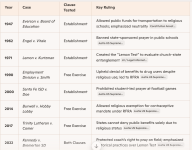 Screenshot 2025-10-16 203805.png162.3 KB · Views: 5
Last edited:
 I. Design: Biblical Foundations in Government Structure
 II. Construction: Christian Influence in Founding Documents and Institutions
 III. Implementation: Christian Morality in Law and Policy
 IV. Operation: Ongoing Christian Influence in Civic Life
 A Nation Under God
 Supreme Court: “God Save the United States and This Honorable Court”
 Summary: Mechanisms That Glorify God in Government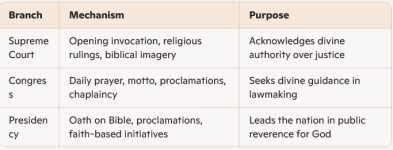
 Educational and Cultural Initiatives
