• Welcome to Christianity Haven, thank you for visiting! If you have not already, we invite you to create an account and join in on the many discussions we have! 

    • Please be aware that when registering you must not register while using a VPN. Any registrations made using a VPN will be rejected.
    • Additionally, registration emails are not being sent out which is an issue that is being worked on. Your registration may go into an approval queue for admin approval. We work to send manual emails to the email on file, so please ensure the email you use is one you can readily access! 

Is Mary "theotokos" or "theoNOTokos"?

BluePrints

Well-known member
Joined
Jun 16, 2026
Messages
178
Gender
Male
Religious Affiliation
Seventh Day Adventist
Marital Status
Single
Acceptance of the Trinity & Nicene Creed
No
Is Mary "theotokos" or "theoNOTokos"?

Let us take a look at “Mary” [Mat. 1:16,18,20, 2:11, 13:55; Mar. 6:3; Luk. 1:27,30,34,38,39,41,46,56, 2:5,16,19,34; Act. 1:14], “the mother of Jesus” [Jhn. 2:1,3; Act. 1:14; see also “his mother” - Mat. 1:18, 2:11; Luk. 2:34,43; Jhn. 19:25; and “mother” - also Jhn. 6:42] who was “espoused to Joseph”, for she is not to be confused with the many other Mary's in the scriptures.

We are going to look at the scriptures in what they themselves have to say about her and what they do not say about her, for there is at this time a persistent theology which pervades much of the Christian world which claims to have support [from the Bible] for an idea that has been defined and termed by many: “theotokos” [literally “GOD-Bearer”, or “one who gives birth to GOD” and/or also loosely given as “Mother of GOD”; being a “title”]. Let us look very closely at the scriptures to see if this “title” is accurate or is instead dangerous.

The first question that should be asked is this, “Is the “title” “theotokos” ever itself given anywhere at all in any of the Scriptures by anyone?” - “No.”

The next question that should be asked is this, “Is Mary ever called by the appellation or designated with the title of “Mother of GOD” [“GOD” being the English for the Greek [Tr.] word “Theos”] anywhere at all in any of the Scriptures by anyone?” - “No.”

Let us now consider a few statements by the Roman Catholic theological position and teaching on this subject of the “theotokos”, for it is said that:

"… Elizabeth is the first to call Mary by her most honourable title "Mother of God …" [Roman Catholic Online Encyclopedia; “V”; "The Blessed Virgin Mary"; subsection “The Visitation”] - CATHOLIC ENCYCLOPEDIA: The Blessed Virgin Mary

Though it is taught by outward Catholicism that she is not the 'mother of divinity' (well and good), yet there is more said inwardly by the dogma [in brief, many more quotes upon request from the highest sources available]...

"… As Mary was truly the mother of Jesus, and as Jesus was truly God from the first moment of His conception, Mary is truly the mother of God. … Theotokos …" [Roman Catholic Online Encyclopedia; “V”; "The Blessed Virgin Mary"; subsection “Mary's divine motherhood”] - CATHOLIC ENCYCLOPEDIA: The Blessed Virgin Mary
"... the Most August Virgin Mary ... this Divine Mother ... Yet our manner of praying to the Blessed Virgin has something in common with our worship of God, so that the Church even addresses to her the words with which we pray to God: "Have mercy on sinners." ... the heavenly choirs, "above whom the Holy Mother of God is exalted." ...” [LEO XIII - AUGUSTISSIMAE VIRGINIS MARIAE; ENCYCLICAL OF POPE LEO XIII; ON THE CONFRATERNITY OF THE HOLY ROSARY] - Augustissimae Virginis Mariae (September 12, 1897) & On the Confraternity of the Holy Rosary - Papal Encyclicals

Let us look at the first quote again and ask yet another question. “Did Elizabeth [the cousin of Mary] ever call Mary by the “title” “Mother of God” in any part of the Scriptures?” - “No.”

Where then does the Roman Catholic theological position obtain the slightest ground from Scripture to say that Elizabeth says such? Luke 1:43 is oft cited:

And whence [is] this to me, that the mother of my Lord should come to me? Luke 1:43 [KJB]
kai poqen moi touto ina elqh h mhthr tou kuriou mou proV me Luke 1:43 [Stephen's 1550 Textus Receptus; Tr. Greek] - Luke 1 - Parallel Greek New Testament - HTML Bible by johnhurt.com
kai poqen moi touto ina elqh h mhthr tou kuriou mou proV me Luke 1:43 [Byzantine Majority; Tr. Greek] - Luke 1 - Parallel Greek New Testament - HTML Bible by johnhurt.com
kai poqen moi touto ina elqh h mhthr tou kuriou mou proV eme Luke 1:43 [Alexandrian; Tr. Greek] - Luke 1 - Parallel Greek New Testament - HTML Bible by johnhurt.com
And whence is this to me, that the mother of my Lord should come to me? Luke 1:43 [Douay Rheims; Jesuit text] - Douay-Rheims Bible, Luke Chapter 1
Et unde hoc mihi ut veniat mater Domini mei ad me? Luke 1:43 [Clementine Latin Vulgate Online] - Luke 1 in the Clementine Vulgate Latin Bible

As as side note:​
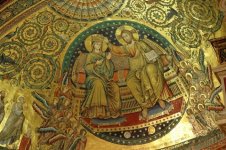
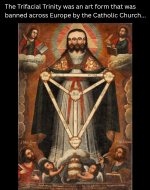
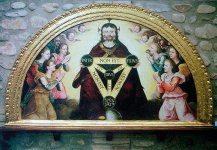
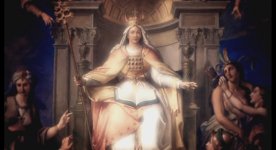
According to a certain scholar of Roman Catholicism, Mary is not really Joseph’s wife ( CHURCH FATHERS: The Perpetual Virginity of Mary (Jerome) ) as per Jerome, called ‘Theotokos’ (‘Mother of God’), wearing the 12 Gem breastplate (as a high priest in Christ’s place), 7 branch shepherd’s rod, & dragon horns, ‘assumed’ into Heaven, ‘exalted above angels’, ‘Mediatrix’, ‘Co-Redemptrix’, ‘Reparatrix’, &c.​

Roman Catholicism - Counterfeit Sanctuary - High Priest Mary - 12 Stone Breastplate Of Judgment.jpg

Some simple summary points to think on, and for discussion:

[1] Mary is a daughter of God, by creation & redemption (as she was a sinner like everyone else; Lev. 12:1-8; Psa. 51:5; Luk. 1:38,47-48, 2:22,44-49; Mat. 12:46-50; Mar. 3:21-35; Jhn. 2:4; Rom. 3:23; 1 Tim. 2:15 KJB), a finite being of the nature of mankind with a beginning, & a death.
  • [a] by fleshy descendancy from Adam, as one of mankind (Gen. 20:-25, 3:20; Luk. 3:23,38; Act. 17:26 KJB)
  • as by adoption accepting the offer of God in the Messiah / Christ Jesus (Gen. 3:15 KJB)

[2] Jesus has two natures, that of Eternal ever-existing unsullied Deity (Jhn. 1:1-3, 8:58; Heb. 1:8-13, 13:4-8; Psa. 45:6-7, 102:12,25-27, KJB), and of finite, created mankind (Heb. 10:5 KJB) and its fallen sinful nature (Rom. 8:3 KJB)

    • [a] Thus the nature of Jesus' Deity has no mother, since His nature of Deity is of His eternal Father (Heb. 1:3 KJB) alone, and so Jesus is the monogenes (Jhn. 3:16 KJB) of the monon alethinon theon (Jhn. 17:3 KJB).
    • Thus Jesus' nature of mankind is created (Rom. 1:3; Heb. 10:5 KJB) and does stem from the sinful flesh of the mother (Psa. 51:5; Rom. 8:3; Gal. 4:4; Heb. 2:13-14,17-18 KJB; &c.) and earthly fallen 'fathers' (Luk. 1:32,73; Jhn. 7:42, 8:53; Rom. 1:3; 2 Tim. 2:8; Rev. 5:5 KJB), and took not on the unfallen nature of angels (Heb. 2:16 KJB), so has an earthly mother in origin in human nature, but no earthly immediate father (Luk. 1:35, 2:49 KJB) in origin of human nature.

[3] Therefore, Mary is the TheoNOTokos, not the Theotokos. She herself had no such thoughts as modern Marianists do, magnifying herself (Luk. 1:38-56 KJB).

[4] She is acknowledged as the mother of the Messiah, and King of Israel - Luk. 1:43, but not the 'mother of God', since the koine Greek is clear, 'η μητηρ του κυριου μου' (the mother of my Lord). Not one text, or even collection of texts, in all of scripture says that Mary is 'the mother of God'. It is a fabrication, made up by Marianists.

[5] What does Catholicism do with 'Anne', and the rest of the ancestral women of Mary's line all the way back to Eve? Is 'Anne' the "Grand-mother of God"? Is her mother the "Great-Grand-mother of God" ... is Eve the "Great-Great-Great ... Great-Grand-mother of God"?

[6] Jesus said, when told about Mary being outside seeking him,

    • Mat_12:48 But he answered and said unto him that told him, Who is my mother? and who are my brethren?
    • Mat 12:49 And he stretched forth his hand toward his disciples, and said, Behold my mother and my brethren!
    • Mat 12:50 For whosoever shall do the will of my Father which is in heaven, the same is my brother, and sister, and mother.
    • Mar_3:33 And he answered them, saying, Who is my mother, or my brethren?

    • Mar 3:34 And he looked round about on them which sat about him, and said, Behold my mother and my brethren!
    • Mar 3:35 For whosoever shall do the will of God, the same is my brother, and my sister, and mother.
      • [a] Therefore, are all Christians who follow Christ are as the "mother" of Jesus, and we each also "Theotokos", yes / no, by the same silly reasoning as the Marianists? If not, why not, since the same logic applies across the board.
[7] God has no origins, no beginning, no ending; God always is (I AM; Exo. 3:14; Jhn. 8:58 KJB). While God (the Person / Being of the Son) manifested himself in the flesh (1 Tim. 3:16 KJB) of sinful fallen mankind (in spite of Catholicism's 'Original Sin', 'Immaculate Conception' (of Mary by 'Anne') and 'Impeccability' dogmas), that is simply coming through the veil of the flesh, as walking through a door, opened (womb), and then closed (womb). "God" therefore has no mother.

    • [a] due to Catholicism's "trinity" definition, they would also have to say that Mary was the Mother of the Father, and the Holy Ghost also, since they are included in the "God" of Catholicism, being "perfectly one superabound"
More can be discussed as needful.
 
Last edited:

Lamb

God's Lil Lamb
Community Team
Administrator
Supporting Member
Joined
Jun 10, 2015
Messages
34,735
Age
59
Gender
Female
Religious Affiliation
Lutheran
Political Affiliation
Conservative
Marital Status
Married
Acceptance of the Trinity & Nicene Creed
Yes
Is Mary "theotokos" or "theoNOTokos"?

Let us take a look at “Mary” [Mat. 1:16,18,20, 2:11, 13:55; Mar. 6:3; Luk. 1:27,30,34,38,39,41,46,56, 2:5,16,19,34; Act. 1:14], “the mother of Jesus” [Jhn. 2:1,3; Act. 1:14; see also “his mother” - Mat. 1:18, 2:11; Luk. 2:34,43; Jhn. 19:25; and “mother” - also Jhn. 6:42] who was “espoused to Joseph”, for she is not to be confused with the many other Mary's in the scriptures.

We are going to look at the scriptures in what they themselves have to say about her and what they do not say about her, for there is at this time a persistent theology which pervades much of the Christian world which claims to have support [from the Bible] for an idea that has been defined and termed by many: “theotokos” [literally “GOD-Bearer”, or “one who gives birth to GOD” and/or also loosely given as “Mother of GOD”; being a “title”]. Let us look very closely at the scriptures to see if this “title” is accurate or is instead dangerous.

The first question that should be asked is this, “Is the “title” “theotokos” ever itself given anywhere at all in any of the Scriptures by anyone?” - “No.”

The next question that should be asked is this, “Is Mary ever called by the appellation or designated with the title of “Mother of GOD” [“GOD” being the English for the Greek [Tr.] word “Theos”] anywhere at all in any of the Scriptures by anyone?” - “No.”

Let us now consider a few statements by the Roman Catholic theological position and teaching on this subject of the “theotokos”, for it is said that:

"… Elizabeth is the first to call Mary by her most honourable title "Mother of God …" [Roman Catholic Online Encyclopedia; “V”; "The Blessed Virgin Mary"; subsection “The Visitation”] - CATHOLIC ENCYCLOPEDIA: The Blessed Virgin Mary

Though it is taught by outward Catholicism that she is not the 'mother of divinity' (well and good), yet there is more said inwardly by the dogma [in brief, many more quotes upon request from the highest sources available]...

"… As Mary was truly the mother of Jesus, and as Jesus was truly God from the first moment of His conception, Mary is truly the mother of God. … Theotokos …" [Roman Catholic Online Encyclopedia; “V”; "The Blessed Virgin Mary"; subsection “Mary's divine motherhood”] - CATHOLIC ENCYCLOPEDIA: The Blessed Virgin Mary
"... the Most August Virgin Mary ... this Divine Mother ... Yet our manner of praying to the Blessed Virgin has something in common with our worship of God, so that the Church even addresses to her the words with which we pray to God: "Have mercy on sinners." ... the heavenly choirs, "above whom the Holy Mother of God is exalted." ...” [LEO XIII - AUGUSTISSIMAE VIRGINIS MARIAE; ENCYCLICAL OF POPE LEO XIII; ON THE CONFRATERNITY OF THE HOLY ROSARY] - Augustissimae Virginis Mariae (September 12, 1897) & On the Confraternity of the Holy Rosary - Papal Encyclicals

Let us look at the first quote again and ask yet another question. “Did Elizabeth [the cousin of Mary] ever call Mary by the “title” “Mother of God” in any part of the Scriptures?” - “No.”

Where then does the Roman Catholic theological position obtain the slightest ground from Scripture to say that Elizabeth says such? Luke 1:43 is oft cited:

And whence [is] this to me, that the mother of my Lord should come to me? Luke 1:43 [KJB]

kai poqen moi touto ina elqh h mhthr tou kuriou mou proV me Luke 1:43 [Stephen's 1550 Textus Receptus; Tr. Greek] - Luke 1 - Parallel Greek New Testament - HTML Bible by johnhurt.com
kai poqen moi touto ina elqh h mhthr tou kuriou mou proV me Luke 1:43 [Byzantine Majority; Tr. Greek] - Luke 1 - Parallel Greek New Testament - HTML Bible by johnhurt.com
kai poqen moi touto ina elqh h mhthr tou kuriou mou proV eme Luke 1:43 [Alexandrian; Tr. Greek] - Luke 1 - Parallel Greek New Testament - HTML Bible by johnhurt.com
And whence is this to me, that the mother of my Lord should come to me? Luke 1:43 [Douay Rheims; Jesuit text] - Douay-Rheims Bible, Luke Chapter 1
Et unde hoc mihi ut veniat mater Domini mei ad me? Luke 1:43 [Clementine Latin Vulgate Online] - Luke 1 in the Clementine Vulgate Latin Bible

As as side note:​
According to a certain scholar of Roman Catholicism, Mary is not really Joseph’s wife ( CHURCH FATHERS: The Perpetual Virginity of Mary (Jerome) ) as per Jerome, called ‘Theotokos’ (‘Mother of God’), wearing the 12 Gem breastplate (as a high priest in Christ’s place), 7 branch shepherd’s rod, & dragon horns, ‘assumed’ into Heaven, ‘exalted above angels’, ‘Mediatrix’, ‘Co-Redemptrix’, ‘Reparatrix’, &c.​

View attachment 2511

Some simple summary points to think on, and for discussion:

[1] Mary is a daughter of God, by creation & redemption (as she was a sinner like everyone else; Lev. 12:1-8; Psa. 51:5; Luk. 1:38,47-48, 2:22,44-49; Mat. 12:46-50; Mar. 3:21-35; Jhn. 2:4; Rom. 3:23; 1 Tim. 2:15 KJB), a finite being of the nature of mankind with a beginning, & a death.
  • [a] by fleshy descendancy from Adam, as one of mankind (Gen. 20:-25, 3:20; Luk. 3:23,38; Act. 17:26 KJB)
  • as by adoption accepting the offer of God in the Messiah / Christ Jesus (Gen. 3:15 KJB)

[2] Jesus has two natures, that of Eternal ever-existing unsullied Deity (Jhn. 1:1-3, 8:58; Heb. 1:8-13, 13:4-8; Psa. 45:6-7, 102:12,25-27, KJB), and of finite, created mankind (Heb. 10:5 KJB) and its fallen sinful nature (Rom. 8:3 KJB)

    • [a] Thus the nature of Jesus' Deity has no mother, since His nature of Deity is of His eternal Father (Heb. 1:3 KJB) alone, and so Jesus is the monogenes (Jhn. 3:16 KJB) of the monon alethinon theon (Jhn. 17:3 KJB).
    • Thus Jesus' nature of mankind is created (Rom. 1:3; Heb. 10:5 KJB) and does stem from the sinful flesh of the mother (Psa. 51:5; Rom. 8:3; Gal. 4:4; Heb. 2:13-14,17-18 KJB; &c.) and earthly fallen 'fathers' (Luk. 1:32,73; Jhn. 7:42, 8:53; Rom. 1:3; 2 Tim. 2:8; Rev. 5:5 KJB), and took not on the unfallen nature of angels (Heb. 2:16 KJB), so has an earthly mother in origin in human nature, but no earthly immediate father (Luk. 1:35, 2:49 KJB) in origin of human nature.

[3] Therefore, Mary is the TheoNOTokos, not the Theotokos. She herself had no such thoughts as modern Marianists do, magnifying herself (Luk. 1:38-56 KJB).

[4] She is acknowledged as the mother of the Messiah, and King of Israel - Luk. 1:43, but not the 'mother of God', since the koine Greek is clear, 'η μητηρ του κυριου μου' (the mother of my Lord). Not one text, or even collection of texts, in all of scripture says that Mary is 'the mother of God'. It is a fabrication, made up by Marianists.

[5] What does Catholicism do with 'Anne', and the rest of the ancestral women of Mary's line all the way back to Eve? Is 'Anne' the "Grand-mother of God"? Is her mother the "Great-Grand-mother of God" ... is Eve the "Great-Great-Great ... Great-Grand-mother of God"?

[6] Jesus said, when told about Mary being outside seeking him,

    • Mat_12:48 But he answered and said unto him that told him, Who is my mother? and who are my brethren?
    • Mat 12:49 And he stretched forth his hand toward his disciples, and said, Behold my mother and my brethren!
    • Mat 12:50 For whosoever shall do the will of my Father which is in heaven, the same is my brother, and sister, and mother.
    • Mar_3:33 And he answered them, saying, Who is my mother, or my brethren?

    • Mar 3:34 And he looked round about on them which sat about him, and said, Behold my mother and my brethren!
    • Mar 3:35 For whosoever shall do the will of God, the same is my brother, and my sister, and mother.
      • [a] Therefore, are all Christians who follow Christ are as the "mother" of Jesus, and we each also "Theotokos", yes / no, by the same silly reasoning as the Marianists? If not, why not, since the same logic applies across the board.
[7] God has no origins, no beginning, no ending; God always is (I AM; Exo. 3:14; Jhn. 8:58 KJB). While God (the Person / Being of the Son) manifested himself in the flesh (1 Tim. 3:16 KJB) of sinful fallen mankind (in spite of Catholicism's 'Original Sin', 'Immaculate Conception' (of Mary by 'Anne') and 'Impeccability' dogmas), that is simply coming through the veil of the flesh, as walking through a door, opened (womb), and then closed (womb). "God" therefore has no mother.

    • [a] due to Catholicism's "trinity" definition, they would also have to say that Mary was the Mother of the Father, and the Holy Ghost also, since they are included in the "God" of Catholicism, being "perfectly one superabound"
More can be discussed as needful.

Jesus IS God. Hence, Mary is the Mother of God.
 

BluePrints

Well-known member
Joined
Jun 16, 2026
Messages
178
Gender
Male
Religious Affiliation
Seventh Day Adventist
Marital Status
Single
Acceptance of the Trinity & Nicene Creed
No
Jesus IS God. Hence, Mary is the Mother of God.
No, that ("Hence ...") is fallen human logic, working in a fallacy (of 'category error'). Did you consider the points 1-7, which addressed the claim? Simply repeating the claim of 'Mary is 'theotokos'' is a mantra that does not hold up to scrutiny of the scriptures.

One will never find the phrase "Mary is the Mother (capitol "M" no less, deifying already even if unawares) of God" in scripture.

If, Mary is the "Mother of God" as you claim sister, so then are all Christians:

Mat_12:50 For whosoever shall do the will of my Father which is in heaven, the same is my brother, and sister, and mother.​
Mar_3:35 For whosoever shall do the will of God, the same is my brother, and my sister, and mother.​

What will you do with Jesus' own words, sister?

One will never find the title "theotokos" (a made up Greek appellation) in scripture.

"... Theotokos (Greek: Θεοτόκος, translit. Theotókos; Latin Deipara, Dei genetrix; Slavonic: Богородица translit. Bogoroditsa) is a title of Mary, the mother of Jesus, that is used in the Eastern Orthodox Church and Eastern traditions of the Catholic Church. Its more precise English translations include "God-bearer" and "the one who gives birth to God"; those less precise or less literal include "Mother of God Incarnate"[1] and "Mother of God."​
Throughout Christian history, Mary has been venerated ...​
... Theotokos is a compound of two Greek words, θεός "God" and τόκος "childbirth." Literally, this translates as "God-bearer" or "the one who gives birth to God." However, since many English-speaking Orthodox find this literal translation awkward, in liturgical use "Theotokos" is often left untranslated, or paraphrased as "Mother of God." ...​
... Often Origen (died 254 C.E.) is cited as the earliest author to use the title Theotokos for Mary but the text upon which this assertion is based is not genuine (Socrates, Ecclesiastical History 7.32 citing Origen's Commentary on Romans).​
Dionysios of Alexandria used the term in about 250, in an epistle to Paul of Samosata.​
Athanasius of Alexandria in 330, Gregory the Theologian in 370, John Chrysostom in 400, and Augustine all used the term Theotokos.​
Theodoret wrote in 436 that calling Virgin Mary Theotokos was an apostolic tradition. ...​
... The use of Theotokos was formally affirmed at the Third Ecumenical Council held at Ephesus in 431. The competing view (advocated by Nestorius, then Patriarch of Constantinople) was that Mary should be called Christotokos, meaning "Mother of Christ," to restrict her role to the mother of Christ's humanity only and not his divine nature. ..." - Theotokos - New World Encyclopedia
The history of 'the letter' supposedly by Dionysios of Alexandria to Paul of Samosata, has serious issues:

"... This is a draft translation of the supposed letter of Dionysius of Alexandria to Paul of Samosata. Both men actually lived in the middle of the third century AD, but this letter was probably forged around 400 by an Apollinarist, and deliberately given the name of the more ancient figure. The text has been considered spurious since about 1800.​
There is a clear reference to the “Holy Fathers” of Nicaea (325 AD) who created the term “homoousios”, so the letter cannot date before then. It also calls Mary “Theotokos”, “Mother of God”, which term only comes into use in the late 4 th century. Bardy analysed the theological positions, which are somewhat monophysite, and identified them as directed against the School of Antioch, and especially against Diodorus of Tarsus and Theodore of Mopsuestia. His conclusion was that the piece was written by an Apollinarist of the late 4th -early 5th century.2 De Riedmatten considered that the text was most likely 6th century.3 Both Bardy and Bonwetsch4 commented on the crude Greek, at odds with the smooth style of the genuine Dionysius.​
The Greek text was first edited by Turrianus in 1608,5 with a Latin translation and scholia printed as endnotes. This was reprinted endlessly. ..." - https://www.roger-pearse.com/weblog...lexandria_Letter_to_Paul_of_Samosata_v0_1.pdf

See also -

"... The Apollinarians were notorious for forging texts in the names of earlier respected fathers, under which they advanced their own beliefs. Indeed Leontius of Byzantium even wrote a book “Against the frauds of the Apollinarists”. ..." - Theotokos: ps.Dionysius of Alexandria's Letter to Paul of Samosata

In Latin, this spurious 'letter' says, "sancta virgine et Deipara Maria", of which "Deipara" is a Latin translation of the Greek "Theotokos" - Theotokos - Wikipedia

So, its own history, from "Origen", to "Dionysios" is fraudulent, and simply made up and written so that it looks more anciently than it really is. The term is at best 4th-6th century. Think about that. The terminology does not exist in earliest of Christian times, or even up to at least the early-middle 4th century.
 

BluePrints

Well-known member
Joined
Jun 16, 2026
Messages
178
Gender
Male
Religious Affiliation
Seventh Day Adventist
Marital Status
Single
Acceptance of the Trinity & Nicene Creed
No
Top Bottom