• Welcome to Christianity Haven, thank you for visiting! If you have not already, we invite you to create an account and join in on the many discussions we have! 

    • Please be aware that when registering you must not register while using a VPN. Any registrations made using a VPN will be rejected.
    • Additionally, registration emails are not being sent out which is an issue that is being worked on. Your registration may go into an approval queue for admin approval. We work to send manual emails to the email on file, so please ensure the email you use is one you can readily access! 

Do the Ten Commandments still serve a purpose?

jswauto

Well-known member
Joined
Apr 19, 2025
Messages
1,180
Gender
Male
Religious Affiliation
Charismatic
Marital Status
Married
Acceptance of the Trinity & Nicene Creed
Yes

⭐TEN COMMANDMENTS DEPLOYMENT KITS FOR EACH INSTITUTION​

The Deployment Kits exist because righteousness does not spread by accident. It spreads by intentional placement, strategic visibility, and repeatable systems. Each environment — whether a home, church, business, school, government office, police station, military unit, or outreach ministry — faces unique moral pressures and behavioral vulnerabilities. A Deployment Kit is a pre‑assembled package engineered to confront those pressures with God’s law. It removes guesswork, eliminates friction, and makes installation effortless. Instead of asking people to figure out how to display the Ten Commandments, the kits provide everything needed: posters, plaques, cards, infographics, digital files, and QR access. Each kit is tailored to the specific moral dynamics of its environment, ensuring maximum impact. The Deployment Kits turn the Ten Commandments from a concept into a movement, from an idea into an infrastructure, and from a belief into a visible reality.
Each kit is designed as a ready‑to‑deploy package containing everything needed for installation, visibility, and moral impact.

🏠HOME DEPLOYMENT KIT​

Contents:
  • 8.5x11 posters (Classic, Modern, Minimalist)
  • Entryway plaque
  • Laminated wallet cards for each family member
  • Illustrated children’s edition
  • Kitchen‑friendly low‑ink poster
  • Home office desktop wallpaper
  • QR code card linking to full library
Purpose: To establish a moral foundation in the home, shape family culture, and form conscience in daily life.
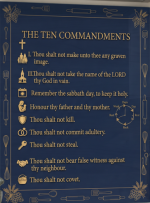
The Home Deployment Kit is designed to transform the household into a moral sanctuary. Every item in the kit reinforces the idea that the home is the first and most important place where conscience is formed. The entryway plaque establishes the home’s allegiance to God’s law from the moment someone steps inside. Posters in the living room and kitchen integrate righteousness into daily rhythms, while illustrated children’s editions shape young hearts with clarity and simplicity. Wallet cards ensure that each family member carries God’s law with them throughout the day, extending the home’s moral influence beyond its walls. Desktop wallpapers sanctify the home office, reminding the worker that integrity governs their labor. The QR code card links the family to the full library, making God’s law instantly accessible. This kit turns the home into a training ground for righteousness.

⛪CHURCH DEPLOYMENT KIT​

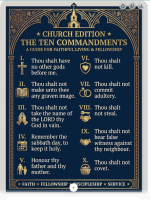
Church-11-01 201321.png
Contents:
  • Lobby plaque (Classic or Stone Tablet style)
  • Sanctuary hallway poster set
  • Fellowship hall poster
  • Youth room illustrated edition
  • Classroom boards (chalkboard or whiteboard style)
  • Sermon presentation slides
  • Social media pack for congregation
  • QR code cards for members
Purpose: To anchor worship, discipleship, and community life in God’s moral authority.
The Church Deployment Kit anchors the congregation in moral seriousness and biblical authority. The lobby plaque establishes the church’s identity as a community governed by God’s law. Sanctuary hallway posters prepare hearts for worship by confronting conscience before entering the presence of God. Fellowship hall posters stabilize relationships and elevate unity. Youth room editions speak directly to the moral formation of teenagers, confronting temptation and shaping identity. Classroom boards integrate the commandments into discipleship and teaching. Sermon slides equip pastors to preach moral clarity with visual impact. Social media packs extend the church’s influence beyond Sunday gatherings, while QR cards allow members to access the full library instantly. This kit ensures that God’s law is woven into every layer of church life.

🏢BUSINESS DEPLOYMENT KIT​

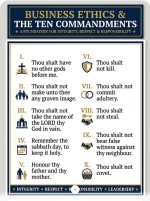
Business 2026-11-01 201533.png
Contents:
  • Entrance poster (Business‑Friendly Edition)
  • Break room compliance‑style poster
  • Manager’s office plaque
  • Customer service desk mini‑poster
  • Warehouse high‑contrast poster
  • Workplace ethics infographic
  • Desktop wallpapers for staff
  • QR code card for employee handbook
Purpose: To elevate integrity, reduce conflict, restrain theft, and strengthen workplace culture.
The Business Deployment Kit transforms the workplace into an environment of integrity, trust, and accountability. The entrance poster communicates to customers and employees that this business operates under God’s moral standard. Break room compliance posters confront gossip, conflict, and disrespect — stabilizing workplace culture. The manager’s office plaque guides leadership decisions with righteousness and fairness. Customer service desk posters elevate honesty and patience during tense interactions. Warehouse posters confront theft, carelessness, and disorder in high‑risk areas. Workplace ethics infographics translate the commandments into practical business outcomes, making righteousness measurable. Desktop wallpapers reinforce integrity throughout the workday. QR code cards integrate the commandments into employee handbooks and onboarding. This kit turns the workplace into a moral ecosystem.

🏫SCHOOL DEPLOYMENT KIT​

Contents:
  • Hallway posters (School‑Friendly Edition)
  • Classroom boards (kids or teen versions)
  • Cafeteria poster
  • Library poster
  • Administrative office plaque
  • Anti‑bullying infographic
  • Student wallet cards
  • QR code stickers for student planners
Purpose: To restrain bullying, cheating, disrespect, and classroom disruption while forming moral awareness.
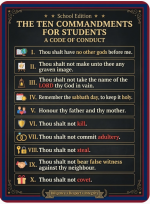
The School Deployment Kit restores moral clarity to educational environments. Hallway posters confront bullying, disrespect, and chaos in high‑traffic zones. Classroom boards integrate the commandments into learning, shaping both mind and character. Cafeteria posters stabilize social dynamics where conflict often arises. Library posters sanctify intellectual pursuit, reminding students that knowledge must be guided by truth. Administrative office plaques elevate leadership integrity and fairness. Anti‑bullying infographics translate the commandments into practical behavioral expectations. Student wallet cards give young people a portable moral compass. QR stickers in planners ensure constant access to God’s law. This kit turns the school into a place where righteousness is visible, expected, and normal.

🏛️GOVERNMENT OFFICE DEPLOYMENT KIT​

Contents:
  • Lobby plaque (Neutral Typography Edition)
  • Clerk counter mini‑posters
  • Waiting room poster
  • Conference room plaque
  • Public trust infographic
  • Desktop wallpapers for staff
  • QR code cards for public distribution
Purpose: To restore moral seriousness, restrain corruption, and elevate public trust.
The Government Office Deployment Kit restores the historic connection between God’s law and civil order. The lobby plaque communicates that justice is rooted in moral truth, not political convenience. Clerk counter posters elevate honesty and fairness during public interactions. Waiting room posters calm tension and elevate respect. Conference room plaques confront dishonesty, favoritism, and corruption at the decision‑making level. Public trust infographics demonstrate how moral clarity strengthens governance. Desktop wallpapers reinforce integrity among staff throughout the workday. QR cards allow citizens and employees to access the full library instantly. This kit stabilizes public service by placing God’s law at the heart of civic life.

🚓POLICE STATION DEPLOYMENT KIT​

Contents:
  • Main hallway plaque (Law Enforcement Edition)
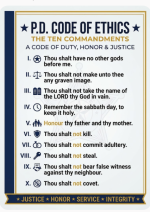
  • Briefing room poster
  • Intake area high‑contrast poster
  • Community room poster
  • Officer wallet cards
  • Justice & integrity infographic
  • Chaplain presentation slides
  • QR code cards for community outreach
Purpose: To restrain misconduct, elevate justice, strengthen officer accountability, and stabilize community relations.
The Police Station Deployment Kit strengthens justice, accountability, and moral courage within law enforcement. The main hallway plaque confronts officers daily with the reality that their authority is under God’s authority. Briefing room posters shape mindset before duty, restraining anger and elevating restraint. Intake area posters stabilize behavior during high‑tension encounters. Community room posters build trust with the public by demonstrating moral seriousness. Officer wallet cards provide a portable reminder of righteousness during patrol. Justice and integrity infographics translate the commandments into practical policing principles. Chaplain slides equip spiritual leadership within the department. QR cards extend moral resources to community outreach. This kit stabilizes law enforcement culture through visible moral authority.
 
Last edited:
jswauto

Well-known member
Joined
Apr 19, 2025
Messages
1,180
Gender
Male
Religious Affiliation
Charismatic
Marital Status
Married
Acceptance of the Trinity & Nicene Creed
Yes

Government 2026-11-01 202453.pngSchoolt 2026-11-01 202707.pngKitchen 2026-11-01 205143.pngPolice2026-11-01 202257.png​

🎖️MILITARY UNIT DEPLOYMENT KIT​

Military2026-11-01 202128.png
Contents:
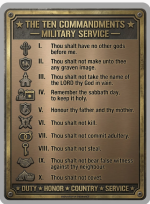
  • Briefing room poster (Camouflage Edition)
  • Barracks hallway poster
  • Chaplain’s office plaque
  • Unit HQ plaque
  • Morale & discipline infographic
  • Soldier wallet cards
  • Deployment‑ready laminated cards
  • QR code cards for field access
Purpose: To strengthen discipline, unity, moral courage, and spiritual readiness.
The Military Deployment Kit strengthens discipline, unity, and moral courage within the armed forces. Briefing room posters anchor soldiers in righteousness before missions. Barracks hallway posters confront conflict, temptation, and disrespect in daily interactions. Chaplain’s office plaques reinforce spiritual guidance, repentance, and moral restoration. Unit HQ plaques elevate leadership integrity and decision‑making. Morale and discipline infographics translate the commandments into military virtues. Soldier wallet cards provide portable moral clarity in the field. Laminated deployment cards withstand harsh conditions, ensuring God’s law is present even in combat zones. QR cards provide instant access to the full library anywhere. This kit fortifies military culture with divine authority.

❤️OUTREACH MINISTRY DEPLOYMENT KIT​

Outreach.png
Contents:
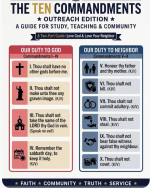
  • Dining hall poster (Outreach Edition)
  • Chapel poster
  • Counseling room poster
  • Volunteer area poster
  • Recovery‑focused infographic
  • Pocket cards for clients
  • Social media pack for outreach
  • QR code cards for follow‑up resources
Purpose: To stabilize vulnerable populations, confront destructive behavior, and guide transformation.
The Outreach Deployment Kit stabilizes vulnerable populations and guides them toward transformation. Dining hall posters confront violence, theft, and disrespect in communal spaces. Chapel posters anchor spiritual renewal and repentance. Counseling room posters provide moral clarity during healing and recovery. Volunteer area posters strengthen unity, humility, and integrity among those serving the broken. Recovery‑focused infographics translate the commandments into practical steps toward restoration. Pocket cards give clients portable reminders of God’s standard. Social media packs extend outreach beyond physical gatherings. QR cards provide instant access to resources, teaching, and the full library. This kit turns outreach environments into places of safety, healing, and moral rebirth.

⭐SUMMARY — Deployment Kits as Engines of Moral Reformation​

The Deployment Kits transform the Ten Commandments Deployment System from a library of resources into a scalable moral reformation strategy. Each kit is a tactical unit — a ready‑to‑deploy package designed to saturate an environment with God’s law. Homes receive tools for shaping conscience. Churches receive tools for anchoring worship and discipleship. Businesses receive tools for elevating integrity and trust. Schools receive tools for restraining bullying and forming character. Government offices receive tools for restoring moral seriousness. Police stations receive tools for strengthening justice and accountability. Military units receive tools for reinforcing discipline and moral courage. Outreach ministries receive tools for stabilizing vulnerable populations and guiding transformation.
Together, these kits create a network of environments where God’s law is visible, normal, and authoritative. They mechanize righteousness, operationalize moral clarity, and restore the Ten Commandments to public life. The Deployment Kits are not accessories — they are engines driving the return of God’s moral order into the everyday spaces where people live, work, learn, serve, and lead.
 
Last edited:

Lady Queue

New member
Joined
Oct 16, 2026
Messages
4
Gender
Female
Religious Affiliation
Methodist
Marital Status
Married
Acceptance of the Trinity & Nicene Creed
Yes
You don't just get to display things wherever you want because there are rules and regulations...even where you work. Freedom of speech does not mean I get to freely staple or tape things wherever I want them to be. Most businesses require asking permission before displaying anything, even if they have a bulletin board for people to put things on.
Yeah.. I think he pretty much covered that..


"1. ASK PERMISSION​

Never assume that because a wall is visible, it is available.
Before displaying anything on property that does not belong to you, obtain permission from the person or organization authorized to make that decision.
This applies to:
  • workplaces
  • businesses
  • schools
  • government buildings
  • police stations
  • military facilities
  • apartment common areas
  • community centers
  • hospitals
  • libraries
  • bulletin boards
  • other people's property"
 

Lamb

God's Lil Lamb
Community Team
Administrator
Supporting Member
Joined
Jun 10, 2015
Messages
34,975
Age
59
Gender
Female
Religious Affiliation
Lutheran
Political Affiliation
Conservative
Marital Status
Married
Acceptance of the Trinity & Nicene Creed
Yes
Yeah.. I think he pretty much covered that..


"1. ASK PERMISSION​

Never assume that because a wall is visible, it is available.
Before displaying anything on property that does not belong to you, obtain permission from the person or organization authorized to make that decision.
This applies to:
  • workplaces
  • businesses
  • schools
  • government buildings
  • police stations
  • military facilities
  • apartment common areas
  • community centers
  • hospitals
  • libraries
  • bulletin boards
  • other people's property"

Yeah but not everyone wants to read his Ai posts and he is probably on ignore by a few people.
 

jswauto

Well-known member
Joined
Apr 19, 2025
Messages
1,180
Gender
Male
Religious Affiliation
Charismatic
Marital Status
Married
Acceptance of the Trinity & Nicene Creed
Yes

THE DIVINE DESIGN OF THE TEN COMMANDMENTS​

The Genius, Order, Balance, Moral Architecture, and Spiritual Purpose of God's Ten Words​

The biblical foundation deserves careful treatment. The Decalogue appears principally in Exodus 20:1–17 and Deuteronomy 5:6–21. The two accounts are closely related but not word-for-word identical, and Scripture elsewhere calls them the“ten words.” [biblegateway.com], [bible-expert.app]
And notice where God begins.
Before the first prohibition comes:
“I am the LORD your God, who brought you out of the land of Egypt, out of the house of bondage.” Exodus 20:1–17 [biblegateway.com]
That suggests an enormous theological point:
DELIVERANCE → COVENANT RELATIONSHIP → MORAL INSTRUCTION

God does not begin by saying merely,“Here are ten arbitrary restrictions.”
He first identifies Himself as the God who delivered them.
That gives us our first major design principle.

INTRO: Ten Words, an Entire Moral Architecture​

The Ten Commandments are remarkable not merely because of what each individual command prohibits or requires, but because of the moral world created when the commandments are viewed together. In remarkably compact form, they address allegiance to God, worship, reverence, work and rest, family authority, human life, marriage, property, truth, justice, desire, and the inward condition of the heart. They begin with God identifying Himself as Israel's Deliverer and proceed outward into relationships with neighbor before finally penetrating inward to covetous desire. Exodus 20 opens with God's declaration that He brought Israel out of Egypt and bondage before presenting the commandments. The Decalogue therefore works simultaneously as covenant instruction, moral boundary, revelation of righteous order, and a searching confrontation with the person who hears it. The genius lies partly in its compression: few words carry enormous theological and moral weight. [biblegateway.com], [biblegateway.com]

I. THE COMMANDMENTS BEGIN WITH THE LAWGIVER​

Morality Begins With God, Not Human Preference​

The Decalogue does not begin with mankind debating what morality ought to be. It begins with God identifying Himself. Moral authority therefore proceeds downward from the Creator rather than upward from social consensus. Israel is not invited to vote upon murder, adultery, theft, idolatry, or false witness. God establishes the covenantal and moral framework.

Design principle​

GOD → MORAL AUTHORITY → HUMAN ACCOUNTABILITY
The commandments therefore resist moral relativism at their foundation.
The standard transcends:
  • individual preference,
  • cultural fashion,
  • majority opinion,
  • governmental convenience,
  • economic advantage,
  • personal appetite.

The genius of the design​

Before God regulates human behavior toward other humans, He establishes the ultimate reference point:
Himself.
That prevents morality from floating free of its foundation.

Morality Begins With God, Not Human Preference​

The Decalogue begins neither with humanity nor with a philosophical debate about ethics. It begins with God: “I am the LORD your God.” God identifies Himself and recalls His deliverance of Israel before issuing the commands. This establishes the fundamental orientation of biblical morality. Right and wrong do not originate merely in majority opinion, governmental decree, personal preference, or changing cultural fashion. The commandments come as divine instruction from the covenant Lord. Thus the first foundation of the Ten Commandments is not an isolated rule but authority. Humanity stands accountable before Someone greater than humanity. Every command following the introduction therefore draws seriousness from the identity of the One speaking. The moral structure begins where biblical theology begins: not with autonomous man determining what God should approve, but with God revealing how His people are to live before Him.

II. GRACE PRECEDES COMMAND​

“I Brought You Out” Comes Before “You Shall”​

This point is extremely important for preventing your Deployment System from becoming legalistic.
The historical preface is liberation:
“I brought you out...”
Then come the commands. Exodus 20:1–17 [biblegateway.com]
For Israel, obedience occurs within the context of a relationship already established by God's saving action.
That doesn't make obedience optional.
It establishes its proper order.

Divine architecture​

DELIVERANCE↓
RELATIONSHIP↓
REVELATION↓

OBEDIENCE
That is profoundly different from:
OBEY PERFECTLY → EARN DELIVERANCE
And for Christian teaching this provides an important analogy with the Gospel:
Christ saves.
Then the redeemed life responds to God.
We should therefore never communicate through our Ten Commandments posters:
“Keep these and earn salvation.”
Rather:
“This is God's righteous standard. It exposes sin, teaches holiness, and shows why fallen humanity desperately needs grace.”

“I Brought You Out” Comes Before “You Shall”​

One of the most beautiful structural features of the Decalogue appears before the first prohibition. God identifies Himself as the One who brought Israel “out of the land of Egypt, out of the house of bondage.” In the narrative, liberation therefore precedes the commands. God does not introduce Himself by saying, “Obey these ten rules sufficiently and perhaps I will rescue you from Egypt.” The mighty act of deliverance has already occurred. Then the redeemed covenant people are taught how to live. This does not weaken obedience; it places obedience in its proper theological setting. The basic movement is deliverance → relationship → revelation → obedience. For Christian teaching this becomes an especially important protection against legalism. God's moral law reveals His standard and commands genuine obedience, but a Ten Commandments display should never imply that sinners climb into salvation by accumulating sufficient commandment-keeping. The law shows the holy standard; the Gospel announces the Savior. [biblegateway.com]
 

jswauto

Well-known member
Joined
Apr 19, 2025
Messages
1,180
Gender
Male
Religious Affiliation
Charismatic
Marital Status
Married
Acceptance of the Trinity & Nicene Creed
Yes

III. THE COMMANDMENTS ESTABLISH ORDER OF LOVE​

God First, Neighbor Second​

The commandments reveal an extraordinary orientation.
A common Protestant/Reformed division describes commandments I-IV primarily in relation to God, and V-X primarily in relation to one's neighbor. Christian numbering traditions do differ, so we should not pretend the ordinal divisions themselves are universally identical. [bible-expert.app], [biblehub.com]
But the relational architecture is unmistakable:

Vertical​

Humanity before God

Horizontal​

Humanity before humanity
And this beautifully anticipates the way Jesus summarizes the law:
Love God.
Love your neighbor.

Matthew 22:34–40 presents Jesus joining those two great obligations as the framework upon which the Law and Prophets depend. [biblegateway.com], [biblehub.com]

Design genius​

God's moral order therefore isn't merely:
DON'T DO BAD THINGS.
It is fundamentally relational:

LOVE GOD RIGHTLY.​

LOVE PEOPLE RIGHTLY.​

The prohibitions define boundaries protecting those relationships.

God First, Neighbor Second​

The commandments possess a distinctly relational architecture. In one common Christian arrangement, the first four are primarily Godward and the remaining six primarily concern relationships among human beings, although Jewish and Christian traditions group and number the material differently. The deeper pattern, however, is unmistakable: rightly ordered human life has both a vertical dimension toward God and a horizontal dimension toward neighbor. This helps explain why Christian teaching has so naturally connected the Decalogue with Jesus' great summary of love toward God and neighbor. The commandments therefore cannot adequately be understood merely as ten detached prohibitions. They describe relationships. Exclusive allegiance protects love toward God. Truth, fidelity, respect for life, property, family, and contentment protect relationships with neighbor. Biblical love is consequently not shapeless sentiment. Love possesses moral form. It seeks the good of Godward faithfulness and neighborward righteousness. [bible-expert.app]

IV. COMMANDMENTS 1–4: ORDERING MAN TOWARD GOD​

Worship, Loyalty, Reverence, and Sacred Order​

The opening commands establish man's relationship to the Creator.
They address:
  1. exclusive allegiance to God,
  2. idolatrous worship,
  3. reverence toward God's name,
  4. Sabbath holiness/rest within Israel's covenantal life. Exodus 20:1–17 [biblegateway.com], [biblegateway.com]
Notice the progression.

Commandment I asks:​

WHO receives ultimate allegiance?

Commandment II asks:​

HOW will God be worshiped rather than replaced by an idol?

Commandment III asks:​

HOW will God's name be treated?

Commandment IV asks:​

HOW will sacred time, work, rest, and covenant remembrance be ordered?
That isn't random.
Identity comes first.
Then worship.
Then speech concerning God.
Then the ordering of human activity under God.

Allegiance, Worship, Reverence, and Sacred Order​

The opening commandments establish Israel's fundamental orientation toward God. The people are to have no other gods before the LORD, not create and worship idols, not misuse God's name, and remember the Sabbath within Israel's covenantal life. The sequence moves from who receives ultimate allegiance, to how worship is directed, to how God's name is treated, and then to the ordering of labor and sacred rest before God. The arrangement therefore goes deeper than religious ritual. It establishes that God possesses a rightful claim upon loyalty, worship, speech, time, labor, and communal life. Human beings do not merely give God a small religious compartment while retaining autonomous control over everything else. The God who delivered Israel lays claim upon the whole orientation of covenant life. [biblegateway.com], [biblegateway.com]

V. COMMANDMENT 5: THE GREAT RELATIONAL HINGE​

Honor Begins in the Family​

Then comes:
“Honor your father and your mother.” Exodus 20:1–17 [biblegateway.com]
This fascinatingly stands between obligations oriented principally toward God and prohibitions protecting neighbor.
The family becomes the first great human relationship addressed.
Why is this structurally significant?
Because before society has:
  • governments,
  • corporations,
  • schools,
  • courts,
  • police departments,
  • armies,
a child ordinarily encounters authority, obligation, dependence, care, discipline, and belonging within family life.
So the Decalogue moves beautifully:
GOD
↓
WORSHIP↓
REVERENCE↓
ORDERED LIFE↓

FAMILY↓​

NEIGHBOR
Family becomes the bridge between vertical and broader horizontal obligation.

Honor Begins in the Family​

“Honor your father and your mother” introduces the first explicit human relationship in the sequence and carries a promise concerning life in the land. Structurally, the placement is striking. Before God addresses murder, adultery, theft, false witness, and coveting, He addresses family honor. The family represents one of the first environments in which human beings encounter authority, obligation, dependence, instruction, care, discipline, and responsibility. Long before someone enters a courtroom, corporation, army, legislature, or business, moral formation ordinarily begins in the household. Thus the Decalogue moves naturally from Godward order toward human community through family life. That makes the fifth commandment a powerful bridge between worship and social ethics. A morally serious society cannot forever remain stronger than the homes from which its people emerge. [biblegateway.com], [biblegateway.com]

VI. “YOU SHALL NOT MURDER”​

God Places a Boundary Around Human Life​

The sixth commandment protects human life from wrongful killing. The Ten Commandments [biblehub.com]
Notice what begins happening now.
God places boundaries around things human beings are capable of destroying.
First:

LIFE.​

Before possessions.
Before testimony about possessions.
God addresses man's capacity to destroy another human being.

Moral design​

My anger does not make your life mine to dispose of.
That is a tremendous restraint upon human power.
And Jesus later drives the moral demand deeper by confronting the heart from which destructive hatred arises.
The command isn't therefore merely useful to criminal law.
It confronts the human heart with the dignity and seriousness of another person's life.
 

jswauto

Well-known member
Joined
Apr 19, 2025
Messages
1,180
Gender
Male
Religious Affiliation
Charismatic
Marital Status
Married
Acceptance of the Trinity & Nicene Creed
Yes

God Places a Boundary Around Human Life​

With the prohibition against murder, the Decalogue places a divine boundary around human life. This is one of the most fundamental restraints placed upon fallen human power: my rage, rivalry, fear, ambition, revenge, or perceived advantage does not make another person's life mine to destroy unlawfully. The command therefore protects something more valuable than property, wealth, convenience, or status. It confronts human beings with the seriousness of life itself. In a broader Christian moral reading, this prohibition also encourages examination of the hatred and contempt from which violence can grow. The command is brief, but the protected good is immense. Life belongs inside a moral boundary established by God. Human power is not absolute. [biblegateway.com], [biblegateway.com]

VII. “YOU SHALL NOT COMMIT ADULTERY”​

God Places a Boundary Around Covenant Fidelity​

After life comes marriage.
“You shall not commit adultery.” Exodus 20:1–17 [biblegateway.com]
Here God places moral boundaries around sexual covenant and marital fidelity.

The order is noteworthy​

LIFE → MARRIAGE
Human flourishing is not treated only individually.
Relationships matter.
Promises matter.
Fidelity matters.
Another person's marriage isn't mine to invade simply because desire exists.
Once again, God's law places a limit around appetite.

God Places a Boundary Around Covenant Fidelity​

Having protected life, the Decalogue protects marital fidelity: “You shall not commit adultery.” Marriage is therefore not treated as a disposable arrangement that desire may overrule whenever attraction moves elsewhere. The command establishes a boundary around covenant faithfulness. Another person's marriage is not available merely because desire exists, and one's own covenant is not morally meaningless merely because temptation arises. This reveals a recurring feature of the Decalogue: desire does not create permission. God places moral boundaries where unrestrained appetite could fracture trust, family, promise, and community. Fidelity becomes not merely personal preference but moral obligation. Thus after protecting life, the Decalogue protects one of the foundational human covenants through which family life is formed. [biblegateway.com], [biblegateway.com]

VIII. “YOU SHALL NOT STEAL”​

God Places a Boundary Around Possession​

Then comes:
“You shall not steal.” Exodus 20:1–17 [biblegateway.com]
Notice the expanding moral architecture:
YOUR LIFE IS NOT MINE TO TAKE.
YOUR MARRIAGE IS NOT MINE TO VIOLATE.
YOUR PROPERTY IS NOT MINE TO TAKE.
This is beautiful in its simplicity.
The law teaches the sinner:
My desires do not automatically establish my rights.
That single principle reaches remarkably far.
The individual encounters a boundary:
There is something belonging to my neighbor that I must respect because it is not mine.

God Places a Boundary Around Possession and Stewardship​

The prohibition against stealing extends the divine boundary to property. The principle is simple but profound: what belongs legitimately to another person does not become mine merely because I desire it, can take it, or believe I could use it better. The commandments have now established a powerful sequence: your life is not mine to destroy, your marriage is not mine to violate, and your property is not mine to take. This recognizes moral limits around human acquisition. Strength does not establish ownership. Opportunity does not establish ownership. Desire does not establish ownership. The command therefore supports honesty, stewardship, responsibility, and respect for neighbor. A society in which nothing belonging to another person is morally secure quickly becomes a society governed by force instead of trust.

IX. “YOU SHALL NOT BEAR FALSE WITNESS”​

God Places a Boundary Around Truth and Reputation​

Now comes the command concerning false witness. Exodus 20:1–17 [biblegateway.com]
A society could theoretically protect life and property physically while still destroying people through lies.
Therefore God protects something less tangible but extraordinarily important:

TRUTH.​

A person's:
  • reputation,
  • justice,
  • testimony,
  • relationships,
can be devastated by falsehood.
The command particularly carries obvious judicial significance because false testimony can corrupt justice itself.

Design progression​

LIFE↓
MARRIAGE↓
PROPERTY↓

TRUTH
Now God's moral architecture protects not merely material things but the informational environment in which human community functions.
Without truth, justice becomes unreliable.
Trust collapses.
Relationships deteriorate.

God Places a Boundary Around Truth and Justice​

The command against bearing false witness protects an asset that cannot be held physically: truth. A person's life and possessions might remain physically untouched while reputation, justice, relationships, and livelihood are devastated through false testimony. The command has obvious significance within legal settings, where lies can pervert judgment, but the moral principle reaches into ordinary human relationships as well. Community depends upon the reasonable expectation that words mean something and testimony is trustworthy. Without truth, contracts weaken, courts become unreliable, friendships fracture, institutions lose credibility, and innocent people become vulnerable to manipulation. The Decalogue therefore protects not only tangible goods but the informational environment upon which justice depends. A righteous community must be a truthful community. [biblegateway.com], [biblegateway.com]

X. “YOU SHALL NOT COVET”​

THE LAW FINALLY ENTERS THE HEART​

And then comes what may be the masterstroke of the whole arrangement:
“You shall not covet...” Exodus 20:1–17 [biblegateway.com], [biblegateway.com]
Suddenly God isn't merely regulating an externally observable action.
He confronts desire.
Someone might say:
“I didn't murder.”
“I didn't commit adultery.”
“I didn't steal.”
“I didn't give false testimony.”
And then Commandment X essentially asks:
 
Last edited:

jswauto

Well-known member
Joined
Apr 19, 2025
Messages
1,180
Gender
Male
Religious Affiliation
Charismatic
Marital Status
Married
Acceptance of the Trinity & Nicene Creed
Yes

WHAT DID YOU WANT?​

Now the external law penetrates inward.
That is enormous.
Coveting may exist when:
  • nobody else sees it,
  • no possession changes hands,
  • no police report exists,
  • no courtroom hears evidence,
  • no victim even realizes what is happening.
Yet God sees.

The progression reaches the heart​

EXTERNAL BEHAVIOR↓
RELATIONAL BOUNDARIES↓
SPEECH↓

DESIRE​

This helps explain Paul's extraordinary use of this very command in Romans 7:7:
without the law, he says, he would not have understood coveting in the same way.
The tenth command destroys the fantasy that righteousness consists only of avoiding externally prosecutable crimes.
God legislates deeper than Caesar can reach.

God's Law Finally Penetrates the Hidden Heart​

The tenth commandment brings the Decalogue to an extraordinary climax because coveting can occur without any externally observable crime. A person can refrain from murder, adultery, theft, and false testimony while inwardly desiring what belongs to another. At that point God's moral law crosses a boundary no earthly judicial system can completely police: the interior life. No human officer can arrest every covetous thought. No court can examine every hidden desire. Yet God addresses desire itself. The command therefore prevents righteousness from being reduced to merely avoiding prosecution. External conformity is not the entirety of holiness. The final command turns the hearer inward and asks not simply, “What have you done?” but “What rules your desires?” In this sense the Decalogue ends by showing that God's jurisdiction reaches farther than Caesar's. God sees the heart. [biblegateway.com], [biblegateway.com]

XI. THE DECALOGUE MOVES FROM GOD TO HEART​

A Complete Moral Architecture​

Look at the whole movement:
GOD
↓
WORSHIP↓
GOD'S NAME↓
SACRED ORDER / REST↓
FAMILY↓
LIFE↓
MARRIAGE↓
PROPERTY↓
TRUTH↓

THE HUMAN HEART​

That's the genius I think you've been looking for.
The commandments aren't merely ten disconnected regulations nailed together.
They progressively map man's moral relationships.
They move:

From Creator​

to

worshiper​

to

household​

to

neighbor​

to

conduct​

and finally

desire.​

The last command reveals that God isn't satisfied with outward conformity alone.
He wants truth in the inward being.

A Remarkably Comprehensive Moral Architecture​

When viewed together, the commandments form an extraordinary progression. They begin with God, move through allegiance, worship and reverence, order human work and covenant rest, establish family honor, and then protect life, marriage, property, truth, and finally the inner realm of desire. The result can be summarized as God → worship → reverence → ordered life → family → life → marriage → property → truth → heart. This progression helps explain why the Decalogue has exercised such enduring theological power. It does not regulate merely one compartment of human existence. It reaches from the highest relationship, humanity's relation to God, through the most ordinary relationships of home and neighbor, and finally into the invisible motivations of the person. In remarkably few words, the moral map becomes vast.

XII. NEGATIVE COMMANDS ACTUALLY PROTECT POSITIVE GOODS​

Every “Thou Shalt Not” Draws a Protective Boundary​

This would be especially useful for posters and teaching materials.
People sometimes hear:
“You shall not...”
and think merely:
RESTRICTION.
But morally a prohibition creates a boundary around something valuable.
So:

No murder​

protects life.

No adultery​

protects marital fidelity.

No stealing​

protects property and honest stewardship.

No false witness​

protects truth and justice.

No coveting​

protects contentment and inward integrity.
Likewise, the commands concerning God protect proper worship, reverence, and covenant allegiance.
So the Decalogue is not simply:

TEN PROHIBITIONS.​

It can also be read as:

TEN PROTECTED MORAL REALITIES.​

That would make a fantastic infographic series.

Every “You Shall Not” Draws a Boundary Around Something Valuable​

Prohibitions can sound merely restrictive until we ask what each prohibition protects. “You shall not murder” protects life. “You shall not commit adultery” protects marital fidelity. “You shall not steal” protects legitimate possession and stewardship. “You shall not bear false witness” protects truth and justice. “You shall not covet” protects contentment and inward integrity. The negative form therefore creates positive moral space in which neighbor can live without constant fear of being attacked, betrayed, robbed, slandered, or consumed by another person's envy. This provides an especially useful philosophy for teaching the commandments visually. Instead of presenting them merely as divine “NO” signs, a well-designed Ten Commandments teaching tool can identify the good each boundary defends. The prohibition is the fence; the protected good is what lies inside the fence.

XIII. THE COMMANDMENTS RESTRAIN HUMAN APPETITE​

“I Want It” Is Not the Same as “I May Have It”​

A remarkable philosophical feature runs through the commandments.
Human beings possess desires.
But desire does not create moral permission.
I may desire:
  • another god,
  • an idol,
  • misuse of holy things,
  • endless work,
  • rebellion against family authority,
  • vengeance,
  • another person's spouse,
  • another person's property,
  • a lie protecting myself,
  • everything my neighbor possesses.
The commandments repeatedly answer:

NO.​

Not because desire is irrelevant, but precisely because ungoverned desire can destroy self and neighbor.
The biblical moral philosophy is therefore deeply anti-impulsive:
Freedom does not mean appetite possesses sovereignty.
The human being is morally accountable even when desire screams otherwise.

“I Want It” Does Not Mean “I May Have It”​

Running through the commandments is a direct challenge to the sovereignty of appetite. Human beings want many things, but the Decalogue refuses to treat desire as self-justifying. A person may desire another god, an idol, irreverent use of holy things, relentless labor, rebellion, revenge, another person's spouse, another person's possessions, a convenient lie, or simply the life another person enjoys. God's commandments establish that wanting something does not automatically make pursuing it righteous. This provides a profound moral anthropology: human desire itself requires ordering. True freedom is therefore not the unlimited ability to satisfy every impulse. Freedom must operate within truth, love, righteousness, responsibility, and the good of neighbor. A society that tells every appetite, “Follow yourself,” eventually discovers that appetites collide. God's law establishes boundaries before those collisions destroy people
 
Last edited:

jswauto

Well-known member
Joined
Apr 19, 2025
Messages
1,180
Gender
Male
Religious Affiliation
Charismatic
Marital Status
Married
Acceptance of the Trinity & Nicene Creed
Yes

XIV. THE COMMANDMENTS CREATE BOUNDARIES OF FREEDOM​

Moral Boundaries Make Trustworthy Community Possible​

This is another useful design principle.
Boundaries are sometimes treated as enemies of freedom.
But imagine traffic without lanes.
Property without ownership.
Contracts without truth.
Marriage without fidelity.
Human life without protection.
Authority without limits.
Speech without responsibility.
Morality without boundaries.
The result isn't maximum freedom.
It is vulnerability to whoever possesses the greatest strength, wealth, appetite, deception, or force.
God's moral boundaries therefore protect the weaker person from the unchecked appetite of the stronger.
That's an enormously important civil implication.

Moral Limits Protect Human Community​

It is easy to imagine boundaries as enemies of freedom, but every stable human community depends upon boundaries. Property means little if theft has no moral limit. Marriage means little if fidelity means nothing. Justice collapses if witnesses may lie with impunity. Human life becomes insecure if murderous violence is merely another personal choice. Moral boundaries therefore do not simply suppress human flourishing; they help make trustworthy community possible. One person's moral boundary becomes another person's zone of security. “You shall not steal” means the neighbor can possess something without living permanently under the moral threat of my appetite. “You shall not bear false witness” means another person's reputation is not mine to manipulate casually. Biblical freedom is therefore not chaos. It is human action ordered under God so that love of self does not devour love of neighbor.

XV. THE COMMANDMENTS ARE MEMORABLE BY DESIGN​

Ten Words, Not Ten Thousand Regulations​

Scripture itself refers to the collection as the“ten words.” Ten Commandments explained [bible-expert.app]
That concision matters educationally.
The commandments are capable of being:
  • recited,
  • remembered,
  • taught,
  • displayed,
  • discussed,
  • applied.
They function like a moral framework from which broader applications can be reasoned.
That gets directly into your Deployment System.
A 600-page ethics manual cannot function visually on a wall.
The Ten Commandments can.
They possess extraordinary moral information density.

The “Ten Words” Carry Extraordinary Moral Information Density​

Scripture refers to the collection as the“ten words,” even though traditions differ over how the individual commands are numbered. Their compactness is part of their enduring instructional power. The Decalogue can be learned, repeated, displayed, taught to children, discussed in families, explained in churches, and used as a framework for deeper moral reasoning. It does not function as an exhaustive statute book addressing every conceivable circumstance. Instead, its compact principles open naturally into broader application. That gives the commandments extraordinary moral information density: worship, family, life, marriage, property, justice, truth and desire appear within a remarkably concise framework. This is precisely why visual display can make sense educationally. One cannot place an entire theological library upon a wall, but the Ten Commandments provide a memorable map whose individual principles invite further teaching. [bible-expert.app], [freebiblec...entary.org]

XVI. THE TWO TABLES BECOME A CROSS-SHAPED MORAL PATTERN​

Vertical Love and Horizontal Love​

Without pretending the traditional tablet division itself settles every historical numbering question, the Christian theological symbolism is powerful.

Vertical​

LOVE GOD

Horizontal​

LOVE NEIGHBOR
And at the intersection:

THE HUMAN PERSON LIVING BEFORE GOD AMONG OTHER PEOPLE.​

Jesus' summary of the Law captures precisely those two dimensions: wholehearted love toward God and love toward neighbor. The Ten Commandments: Summed up Christ [biblehub.com]
So the Decalogue isn't abolished conceptually by love.
Love explains its moral direction.

Love Toward God and Love Toward Neighbor​

Christian interpretation has often seen within the Decalogue the two great directions later highlighted by Jesus: wholehearted love toward God and love toward neighbor. Christian traditions number the commandments differently, so we should not make a particular modern numbering scheme the inspired feature. What matters is the unmistakable relational movement. Commands concerning allegiance, worship and God's name are oriented chiefly toward God, while honor, life, marriage, property, testimony and coveting directly affect human relationships. This makes love more concrete. Love for God has consequences for worship and reverence. Love for neighbor has consequences for how neighbor's life, marriage, possessions, reputation and wellbeing are treated. Thus biblical love is not a replacement for moral content. It is the great relational principle explaining why righteous boundaries matter. [bible-expert.app]

XVII. LAW REVEALS BUT CANNOT REGENERATE​

The Design Includes a Diagnostic Function​

This is essential to retain from your previous Deployment Guidelines.
A perfect moral standard can reveal an imperfect human being.
But the standard itself does not regenerate the person.
A mirror shows dirt.
The mirror does not wash the face.
Likewise God's commandments:
  • identify sin,
  • confront conscience,
  • expose self-righteousness,
  • define moral boundaries,
  • instruct.
But Christians proclaim something beyond moral diagnosis:

CHRIST.​

Therefore the most biblically responsible Ten Commandments poster should never imply:
READ POSTER → BECOME RIGHTEOUS

but rather:
GOD'S STANDARD → SELF-EXAMINATION → RECOGNITION OF SIN → NEED FOR GRACE → CHRIST
That preserves the distinction between law and Gospel.

A Perfect Standard Can Diagnose the Sinner Without Becoming the Savior​

This distinction must remain central to the entire Deployment System. The commandments can identify and expose wrongdoing, establish moral boundaries, confront conscience and teach righteousness, but a written command does not regenerate a sinful heart. The Decalogue can tell the thief that stealing is wrong, but the letters printed upon a plaque do not themselves create a new heart. The law functions something like a mirror: the mirror can reveal the stain, but the mirror is not the cleansing agent. Christian proclamation therefore must never stop at“Here is the standard.” The standard exposes humanity's need for divine mercy. That keeps Ten Commandments teaching from becoming moralistic self-salvation. The law reveals the righteousness we owe God; Christ remains the Savior sinners need. A Christian display should therefore magnify God's holiness without suggesting that poster-visible morality substitutes for the Gospel.
 
Last edited:

jswauto

Well-known member
Joined
Apr 19, 2025
Messages
1,180
Gender
Male
Religious Affiliation
Charismatic
Marital Status
Married
Acceptance of the Trinity & Nicene Creed
Yes

XVIII. THE COMMANDMENTS CAN FUNCTION AS MIRROR, COMPASS, GUARDRAIL, AND WITNESS​

Four Functions for Your Deployment Philosophy​

This may be the perfect philosophical basis for the posters.

MIRROR​

They expose sin.

COMPASS​

They orient moral thinking toward God's standard.

GUARDRAIL​

They establish boundaries around destructive behavior.

WITNESS​

They publicly testify that morality is accountable to God rather than merely personal preference.
That gives every deployment piece a clear purpose.
Not magical signage.
Not moral wallpaper.
Not decoration.
MIRROR + COMPASS + GUARDRAIL + WITNESS

A Four-Part Philosophy for Teaching and Display​

These four images provide an especially useful philosophy for the entire Ten Commandments project. As a mirror, the commandments confront the reader with God's standard and encourage self-examination. As a compass, they orient moral thinking toward worship, truth, fidelity, respect, and contentment rather than cultural relativism. As a guardrail, they identify boundaries beyond which human appetite becomes destructive toward God, self, family, or neighbor. And as a witness, their public presence declares that morality is not merely the invention of whichever individual or institution happens to possess power. None of these functions requires pretending that a poster possesses magical power. The physical display serves the truth it communicates. The deeper objective is that the words be read, remembered, taught, discussed, understood, and ultimately embodied.

XIX. DISPLAY SHOULD FOLLOW THE DESIGN OF THE COMMANDMENTS THEMSELVES​

The Medium Should Reflect the Message​

Now we can finally develop the actual visual philosophy your project was missing.
A Ten Commandments display should communicate:

Authority​

Because these are presented as God's commands.

Clarity​

Because moral instruction shouldn't be visually confusing.

Order​

Because the commandments possess a structured moral progression.

Dignity​

Because the subject is holy rather than trivial.

Readability​

Because unreadable moral instruction defeats its own purpose.

Permanence​

Where appropriate, materials can communicate enduring significance.

Beauty​

Not because decoration makes truth true, but because visual excellence can communicate that the subject deserves serious attention.

Restraint​

The poster should not be so visually busy that the commandments disappear beneath graphics.
That gives us a design maxim:

THE ART SERVES THE WORD.​

THE WORD DOES NOT SERVE THE ART.​

The Medium Should Reflect the Message​

If the commandments communicate divine authority, moral seriousness, order, truth, and holiness, their visual presentation should reinforce rather than undermine those qualities. A Ten Commandments poster should therefore privilege clarity, dignity, readability, order, visual restraint, and accurate wording. Decorative elements can help a school version feel educational, a children's version welcoming, a military version disciplined, or a church version reverent, but decoration should never overpower the actual commandments. This establishes an essential design principle for every edition in the Deployment System: the art serves the Word; the Word does not serve the art. Numbers should be unmistakable, typography readable, hierarchy obvious, references accurate, and the reader's eye naturally directed toward the commandments themselves. The best design makes the truth easier to encounter, not harder.
 

jswauto

Well-known member
Joined
Apr 19, 2025
Messages
1,180
Gender
Male
Religious Affiliation
Charismatic
Marital Status
Married
Acceptance of the Trinity & Nicene Creed
Yes

XX. THE PERFECT POSTER PHILOSOPHY​

What Every Ten Commandments Design Should Accomplish​

Every poster should answer five questions immediately:

1. WHO SPEAKS?​

God.

2. WHAT IS BEING COMMUNICATED?​

His commandments.

3. WHAT RELATIONSHIPS DO THEY GOVERN?​

Godward and neighborward.

4. WHAT DO THEY CONFRONT?​

Conduct and ultimately the heart.

5. WHERE DO THEY POINT THE SINNER?​

For Christian presentation:
Toward recognition of sin and ultimately the need for Christ.
That gives us a visual hierarchy:

THE TEN COMMANDMENTS​

God's Moral Standard
Then the ten commands.
Then, where appropriate:
Love God • Love Your Neighbor
Then a restrained Scripture reference:
Exodus 20:1–17 | Deuteronomy 5:6–21
And for specifically Christian teaching versions, perhaps a footer:
The law reveals God's righteous standard; Christ is our Savior.

Every Display Should Communicate Who Speaks, What Is Commanded, and Why It Matters​

A properly conceived Ten Commandments display should answer several questions almost instantly. Who speaks? God, which establishes authority. What is communicated? His moral and covenant instruction recorded in Scripture. What relationships are addressed? Humanity's relation to God and relationships among neighbors. What does the law confront? Not merely public conduct but, by the time coveting is addressed, the inward person. What should a Christian ultimately understand? God's standard exposes humanity's need for grace rather than furnishing a ladder of self-salvation. Consequently, the most effective visual hierarchy will usually be simple: a strong title, the commandments themselves, unobtrusive biblical references, and perhaps a brief theological footer where appropriate. Every additional design element must justify its presence by making comprehension easier. A poster succeeds when the observer remembers the commandments, not merely the graphics surrounding them.

XXI. THE GENIUS OF THE LORD'S DESIGN​

Ten Commands That Reach an Entire Civilization​

And here's where I would take the whole study.
The genius isn't merely that there are ten commandments.
It is how extraordinarily much moral territory they cover with so few words.
They address:
  • theology,
  • worship,
  • reverence,
  • time,
  • labor/rest,
  • family,
  • authority,
  • human life,
  • marriage,
  • sexuality,
  • property,
  • economics,
  • justice,
  • testimony,
  • truth,
  • desire,
  • contentment,
  • inward morality.
That is astonishing moral compression.
Ten Words become an architecture for worship, character, family and community.
And the final command prevents the entire system from degenerating into external legalism because God concludes by confronting something no earthly police force can inspect:

THE HEART.​

That may be the decisive evidence of the Decalogue's theological depth.
Human law asks:
What did you do?
God's law ultimately asks:
What did you desire?
Human courts judge externally demonstrable conduct.
God judges the person.

Ten Words Reach Worship, Society, Relationships, Conduct, and the Heart​

The grandeur of the Decalogue becomes clearest when we consider how much moral territory it covers in such compressed form. It addresses worship and idolatry, reverence and speech, work and sacred rest, parents and children, life and violence, marriage and fidelity, property and theft, testimony and justice, desire and contentment. It speaks simultaneously to religion, family, community, economics, justice, personal character, external behavior, and inward motivation. Yet its climax prevents the entire structure from being reduced to mere external compliance: coveting reaches inward. Human courts can examine actions and testimony; God reaches the desires beneath them. That final inward movement reveals why God's moral standard cannot be confined to civic law or behavioral management. The commandments are concerned with the kind of people human beings are becoming before God.

SUMMARY​

The Divine Architecture of the Ten Commandments​

The Ten Commandments are not a random collection of ancient prohibitions. They form a remarkably compact moral architecture.
They begin with God.
They establish worship.
They protect reverence.
They order work and sacred rest within Israel's covenant life.
They establish family honor.
They protect life.
They protect marriage.
They protect property.
They protect truth.
And finally they penetrate desire itself.
The architecture moves:

GOD → WORSHIP → REVERENCE → ORDER → FAMILY → LIFE → MARRIAGE → PROPERTY → TRUTH → HEART​

Jesus then reveals the great relational summary:

LOVE GOD.​

LOVE YOUR NEIGHBOR.​

And Christian theology completes the picture:

THE LAW REVEALS THE STANDARD.​

THE LAW EXPOSES SIN.​

CHRIST SAVES THE SINNER.​

THE HOLY SPIRIT TRANSFORMS THE HEART.​

The Divine Architecture of the Ten Commandments​

The Ten Commandments should therefore be approached not merely as ten independent rules but as a tightly integrated moral architecture. The structure begins with the God who delivers, establishes exclusive allegiance and reverent worship, orders covenant life, enters the family, protects life, marriage, property and truth, and finally confronts the hidden desires of the heart. The pattern flows outward and inward at once:
GOD → WORSHIP → REVERENCE → ORDER → FAMILY → LIFE → MARRIAGE → PROPERTY → TRUTH → HEART
Their negative boundaries protect positive goods. Their brevity makes them memorable. Their relational structure gives substance to love of God and neighbor. Their inward reach exposes the inadequacy of outward legalism. And their perfection as a moral standard reminds the Christian that knowing the law is not the same thing as possessing a transformed heart.
THE HOLY SPIRIT TRANSFORMS
That is the theological foundation beneath every plaque, classroom board, children's poster, wallet card, military edition, church display, digital graphic, and authorized installation in the entire system.
The Deployment System answers:
How can we make the Ten Commandments visible?
But The Divine Design of the Ten Commandments answers the question that has to come first:
Why are these Ten Words worthy of being remembered, taught, studied, lived, and, where appropriate, displayed in the first place?
 

Lamb

God's Lil Lamb
Community Team
Administrator
Supporting Member
Joined
Jun 10, 2015
Messages
34,975
Age
59
Gender
Female
Religious Affiliation
Lutheran
Political Affiliation
Conservative
Marital Status
Married
Acceptance of the Trinity & Nicene Creed
Yes
But The Divine Design of the Ten Commandments answers the question that has to come first:Why are these Ten Words worthy of being remembered, taught, studied, lived, and, where appropriate, displayed in the first place?
Because the 10 Commandments are good and holy and living by them helps everyone.
 
Top Bottom